
Our world and society is geared toward normalcy. That is, if you have normal mobility, normal dexterity, and normal vision, you are pretty much ay home in our society. You can navigate sidewalks without fear of tripping or bumping into an obstruction, you can walk to your destinations, and you can read signs and notices and safely cross busy intersections without harm.
Assume for a moment that you have lost part of your visual acuity. You can no longer read a book without digital aids, you cannot recognize faces more than a few feet away, you cannot read signs, you cannot read menus, and you cannot drive a vehicle. What becomes of your life?
This new world is full of obstacles. You find that you can no longer cut your own toenails. You can no longer see obscure blemishes on your skin that might signal a health risk. You can no longer prepare meals easily, having to magnify the things you need to read, cut, or test for doneness. You certainly can’t read food labels without some kind of assistive technology. But even that can a hinderance, because you can’t always take it with yuo. Shopping? Getting to the store is the first obstacle. You need transportation. Once in the store you can’t read labels or product information or brand names. What used to be a quick glance to take in all of the items on a shelf becomes a laborious task of leaning in to each item to identify it, usually with some magnifying device. You can use your smart phone to magnify the item and decide if that’s what you want. What happens is that several hours are required to shop instead of the thirty minutes you would have spent otherwise.
Simple pleasures like beautiful scenery become mysterious blurs. Watching your children or others’ children perform in a recital or school play or sporting event is no longer a joy, because you can’t really see them good enough to know what they’re doing. Not recognizing people you know can be embarrassing when you pass by without acknowledging their presence. The simple act of watching television become difficult. Signs in public spaces and buildings are largely ignored because you either don’t see them or can’t get close enough to read them
Most of the things you used to take for granted are no longer possible. The initial shock can be taken lightly or in stark fear. Those who are insecure in their lives will find it difficult to adjust and adapt.
I have this particular disability. That’s what it’s called: a disability. I look upon it more as a challenge. I don’t complain. Things happen. I just find new ways of doing things I used to do, if possible. I von’t do everything I used to do, but I’ve made great strides in adapting. Being a veteran, the VA has been a tremendous help to me. The VIST program (Visual Impaired Support Team) provides counseling and assistive devices to make my life easier. Without them I would probably be floundering in a world of depression and lonely despair. Their assistance has made it possible for me to read and continue writing (the proof is what you are now reading.) I’ve found that the Apple Mac computers, iPads and iPhones have excellent accessibility options. I use a MacBook Pro. It has served me well.
I’ve learned to accept the things I can no longer do. I’m okay with that. A person tends to get over something like that. It is not the end of the world. I plan to make the most of the time I have left.
My wonderful wife has been very supportive and provides assistance when I need it. I have lost much of my independence, and I am grateful for my wife’s assistance.But I don’t want to depend on her for everything. I need to retain as much of the independence I have left as possible. That means I will continue to try to do as many things for myself as I can.
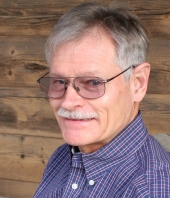
 Author Marc Cullison